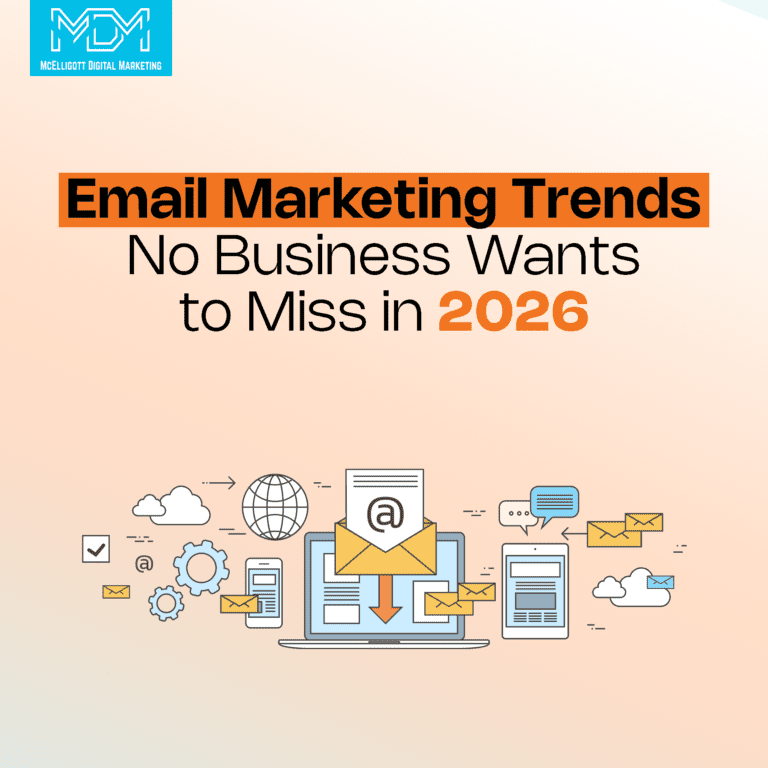
Email marketing continues to be one of the most reliable ways for businesses to connect with their audience. Even as new platforms and technologies emerge, email remains a direct line to customers who have chosen to hear from a brand. In 2026, this email marketing channel will evolve even better.
People now expect emails to be more relevant, timely, and respectful of their privacy. Generic messages sent to everyone at the same time no longer work. Businesses that want results need to understand how email marketing is changing and what strategies are becoming essential.
Technology, especially automation and artificial intelligence, has improved how emails are created, sent, and measured. At the same time, customers are paying attention to transparency, accessibility, and brand values. These changes are setting new standards for what effective email marketing looks like.
In this blog, you’ll learn the most important email marketing trends businesses should pay attention to in 2026. It will help you build stronger connections and improve engagement.
What is email marketing, and why is it important?
Email marketing is sending messages to people who have agreed to receive communication from a business. These messages can include updates, product information, offers, reminders, or helpful content. The goal is to stay connected with your audience and guide them toward action over time.
What makes email marketing important is control. Unlike social media or paid ads, you are not dependent on an algorithm to reach people. When someone is on your email list, you can reach them directly in their inbox. This makes email a more stable and predictable channel for communication.
Email marketing also supports long-term relationships. You can welcome new subscribers, follow up after a purchase, share useful information, and re-engage inactive customers. All of this happens in a structured and measurable way.
From a business point of view, email marketing is cost-effective. It allows you to test messages, track performance, and improve results without heavy spending. Because of these advantages, email continues to play a central role in digital marketing strategies, even as new tools and platforms evolve.
Email marketing trends for 2026
1. Hyper-personalization powered by AI
Personalization in email marketing is no longer limited to using a person’s name in the subject line. Businesses are expected to send emails that reflect what the recipient actually needs, wants, or has shown interest in. This is where AI plays a practical role.
AI helps analyze user behavior such as pages visited, products viewed, past purchases, and email interactions. Based on this data, emails can automatically show different content to different people. For example, two subscribers can receive the same campaign, but see different product suggestions or messages based on their activity.
This level of personalization saves time and improves results. Instead of creating multiple campaigns manually, businesses can rely on systems that adjust content in real time. It also reduces irrelevant emails, which means fewer unsubscribes and better engagement.
To use this trend effectively, businesses should focus on clean data and clear goals. Start small by personalizing product recommendations or follow-up emails. Over time, AI-driven personalization can make email communication more relevant and more effective without adding extra workload.
2. Interactive emails
Interactive emails are becoming more common because they make it easier for people to engage without leaving their inboxes. Instead of only reading and clicking a link, people can take small actions directly inside the email. This includes tapping a poll, browsing a product slider, or opening expandable sections.
The main advantage of interactive emails is reduced effort. When people interact quickly, they are more likely to respond. For example, a short poll inside an email collects feedback faster than sending users to a separate page. Countdown timers also create urgency without adding extra text.
Engagement matters more than ever. Email platforms pay attention to how users interact with messages. Emails that get clicks, taps, or time spent are more likely to reach the inbox in the future.
3. Privacy-first email strategies & first-party data
Privacy directly affects how businesses collect data, send emails, and build trust with their audience. People want to know how their data is used, and they expect companies to be transparent.
This is why first-party data has become so important. First-party data is information you collect directly from your audience, such as email preferences, website behavior, form responses, or past purchases. It is more reliable and more compliant than data bought from third parties.
A privacy-first email strategy focuses on consent and clarity. Subscribers should be aware of the types of emails they will receive and how frequently they will be sent. Preference centers, clear opt-in forms, and easy unsubscribe options are no longer optional.
Businesses that respect privacy see better engagement. When people trust a brand, they are more likely to open emails and take action. The focus should be on collecting less data, but collecting it in the right way and using it responsibly.
4. Predictive send times & automated journeys
Sending emails at the right time has a strong impact on performance. Marketers are moving away from fixed schedules and using predictive tools to decide when each subscriber is most likely to open an email. These tools study past behavior and adjust send times automatically.
Predictive send times help avoid inbox fatigue. Instead of sending emails when it is convenient for the business, emails are sent when the subscriber is more active. This improves open rates without increasing email volume.
Automated journeys also continue to be better. These are email sequences triggered by actions such as signing up, making a purchase, or becoming inactive. When done well, they feel helpful rather than pushy. For example, a new subscriber receives a welcome email, followed by useful information instead of immediate sales messages.
Keep automation purposeful. Each email should have a clear reason to exist. Businesses should regularly review automated flows to remove unnecessary steps and keep the content relevant.
5. Integration with omnichannel Experiences
Email no longer works in isolation. It functions as part of a broader marketing system where multiple channels support each other. This includes SMS, websites, apps, and customer support platforms. The goal is to create a consistent experience across all touchpoints.
For example, a customer browses a product on a website, receives a follow-up email, and later gets a reminder through SMS. Each message builds on the previous one instead of repeating the same information. This improves response rates.
Omnichannel integration also helps businesses understand customer behavior better. When data from different channels is connected, emails can be more relevant and better timed. This leads to fewer generic messages and more targeted communication.
To apply this trend, you should focus on alignment rather than adding more channels. Start by connecting your email with one or two key platforms. Make sure messages are coordinated and not overwhelming.
6. Accessibility & inclusive email design
Accessibility in email marketing means making sure everyone can read and understand your emails, including people with visual, motor, or cognitive limitations.
Simple design choices make a big difference. Clear fonts, readable text sizes, and proper contrast help emails load and display correctly across devices. Adding descriptive text for images ensures that screen readers can explain the content to users who cannot see the images.
Inclusive design also improves overall performance. Emails that are easy to scan and understand work better for all readers, not just those with accessibility needs. Clear buttons, short paragraphs, and direct language reduce friction and increase clicks.
Businesses should review their email templates regularly. Test emails on different devices and email clients. Avoid overly complex layouts. The focus should always be on clarity and ease of use, which benefits both users and campaign results.
7. Value-driven content
Customers are paying closer attention to what businesses stand for. Email marketing is also about sharing values and showing responsibility.
Sustainability messaging does not mean making big claims or using vague language. It means being honest about what your business is doing, even if the steps are small. This could include responsible sourcing, reduced packaging, digital-first communication, or ethical business practices.
Value-driven content also matters. Subscribers are more likely to stay engaged when emails provide useful information, tips, or insights instead of constant sales messages. When values are communicated consistently, email marketing becomes more effective.
Conclusion
As a digital marketing company, we are assured about one thing. Businesses that adapt early to the latest email marketing trends will find it easier to maintain engagement and build long-term relationships.
Rather than being a standalone tactic, email should be part of your broader growth strategy. This means auditing existing campaigns, removing outdated practices, and testing newer approaches in small, measurable steps. Even small improvements in personalization, timing, or content clarity will lead to noticeable results.
If your email campaigns feel inconsistent, underperforming, or difficult to manage, it may be time for a strategic reset. A fresh audit can help at this stage.
Connect with us to review your current email marketing approach, identify practical improvements, and create a plan that aligns with where email marketing is heading.